
The value of land can extend far beneath its surface. Oil, natural gas, precious metals, and industrial minerals can create opportunities for landowners. This comes into play when selling and purchasing the land, but carries a tangible value only when deposits can be developed economically.
Based on production data from the U.S. Geological Survey (USGS), the U.S. Energy Information Administration (EIA), and state agencies, these seven states have the best opportunities for those looking for mineral investments. This is a shortlist of productive mineral regions, not in any way a ranking of available mineral rights or guaranteed returns. We’re including oil and natural gas because they are very significant resources in mineral-rights transactions.
Texas: Oil and Natural Gas
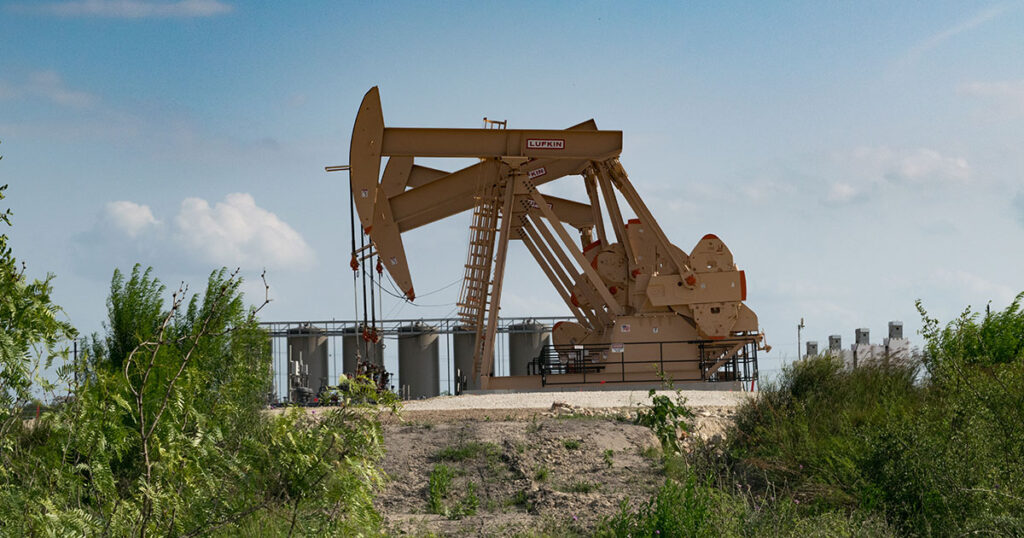
Texas is a leader on this list, clearly based on its established petroleum industry. West Texas shares the Permian Basin with southeastern New Mexico, while South Texas contains the Eagle Ford producing region. According to EIA, the Permian accounted for 48% of U.S. crude oil production in 2025; the Eagle Ford contributed another 9%.
For buyers evaluating mineral interests, these producing regions can be further investigated based on the operating history. As with any oil drilling, nearby resources do not establish that a particular parcel will produce – or that its asking price is justified. Working with a team of experts that can shed more light and certainty on a particular land parcel is highly advised before making any sale or purchasing decisions.
New Mexico: Oil and Natural Gas
New Mexico’s southeastern Permian Basin is another major area to consider as a potential investment. EIA reports that Lea and Eddy counties accounted for approximately 52% of the nation’s crude oil production growth between 2020 and 2024.
That concentration makes location the key when investing in New Mexico. Statewide production strength does not make every mineral interest equally attractive.
North Dakota: Oil and Associated Natural Gas
North Dakota ranks third nationally in both crude oil production and reserves, behind Texas and New Mexico. Its principal opportunity centers on the Bakken region, which extends into Montana. Natural gas recovered alongside oil adds another valuable resource.
Established production makes North Dakota a relevant state for evaluating producing mineral interests, although future income depends on well performance, commodity prices, and lease terms.
Pennsylvania: Natural Gas
Pennsylvania is worth considering when it comes to researching natural gas rights. EIA identifies it as the country’s second-largest natural gas producer after Texas, with almost 7.4 trillion cubic feet of marketed production in 2024.
Its appeal is the scale of demonstrated gas production. When comparing interests, assess actual royalty statements and lease deductions rather than assume that high production automatically translates into high owner income.
Nevada: Gold and Lithium
Nevada will showcase a completely different opportunity: valuable metals and battery resources. USGS identifies Nevada as the leading gold-producing state and the largest state producer of nonfuel minerals by value in 2025. Commercial-scale U.S. lithium production that year came from a Nevada brine operation.
Gold provides an established mining foundation, while lithium adds exposure to battery supply chains. However, owning undeveloped mineral rights is very different from holding an interest in an operating mine.
Arizona: Copper and Molybdenum
Arizona produced approximately 70% of U.S. mined copper in 2025. Copper’s use in electrical systems gives the state major industrial importance. Molybdenum, gold, and silver also contribute to Arizona’s mineral production value.
Arizona merits attention for substantial mineral development, but an individual deposit’s value depends on its size, grade, processing requirements, and development costs. Statewide mineral wealth alone cannot establish a parcel’s commercial potential.
Alaska: Gold, Zinc, and Silver
Alaska combines precious metals with significant industrial mineral production. The Alaska Department of Natural Resources estimated 2025 mineral production value at $5.58 billion, with gold, zinc, and silver accounting for most of that value.
These resources make Alaska worth investigating, but production value is not profit: the state’s estimate explicitly excludes mining costs. Access and development feasibility require close examination.
What Makes Mineral Rights Valuable?
A promising state is only a starting point. Verify exactly which minerals and ownership percentage are conveyed, whether leases already exist, and whether economic extraction is realistic.
Land ownership does not necessarily include mineral ownership. BLM makes it clear that surface and subsurface rights can belong to different parties, including private surface land with federally owned minerals. Clear title and credible geological evidence matter more than a valuable commodity appearing somewhere nearby.